What a Leasing Proposal Should Include to Win the Tenant

A big tenant lines up every leasing proposal in one spreadsheet. Here’s what to include so your building stands out in that comparison and gets the first tour.

A big tenant lines up every leasing proposal in one spreadsheet. Here’s what to include so your building stands out in that comparison and gets the first tour.

Cover illustration for What a Leasing Proposal Should Include to Win the Tenant, from the Closewell Studio blog on sales proposal design
Industries

A large tenant looking for space almost never gets just one leasing proposal. Their broker sends a request to a handful of buildings, collects the answers and lines them up in a spreadsheet. Your proposal becomes one row in that comparison. In our experience, most building owners answer with a short term letter and save the selling for the tour. That’s a miss, because several of the people who approve the lease may never take the tour.

Below is what we’d put in a leasing proposal for a tenant worth chasing. It starts with the terms everyone expects and ends with the parts most buildings skip.

The terms every leasing proposal needs

The tenant’s broker usually sends a list of the terms they want answered. Answer every one, in the order they asked. Reordering or skipping items makes their job harder, and they’ll notice.

The usual list covers the premises, with the suite, the floor and the rentable square feet. Then the term and the commencement date. Base rent and how it escalates. Free rent or abatement. The tenant improvement allowance, or the work the owner will do. How operating expenses and taxes are handled, with the base year or expense stop spelled out. The security deposit or letter of credit. Renewal, expansion and contraction options. Parking, signage, permitted use and the right to assign or sublet. And a clear date when the proposal expires, along with the line that nothing is binding until a lease is signed.

Our read is that all of this belongs on one page. The broker will copy it into their own sheet anyway, so make that easy. A clean term page also tells the tenant you respect their time, which matters more than it sounds when they’re reading six of these in a week.

Show the math the broker will run

Every broker turns a stack of proposals into a net effective rent, the average cost per square foot once free rent and the allowance are spread across the term. Do that math yourself and show it.

If your face rent is higher than the building down the street but your allowance and abatement bring the effective number lower, say so plainly on the summary page. Otherwise the comparison may lead with the headline rent, and you lose on a number that isn’t what the tenant would pay. We wrote more about this in the proposal pricing page that keeps a buyer reading.

Lead with their future space

A test fit saves the tenant from picturing their team on an empty floor plan. Show their headcount on your floor, with the offices, meeting rooms and open seating they asked for. Add the light, the views, the ceiling heights and who sits on the floors around them.

Then show the commute. A simple view of where their people live and how long it takes to get to your building answers a question every people team will ask. For a company trying to bring its team back to the office, that page can matter more than the rent.
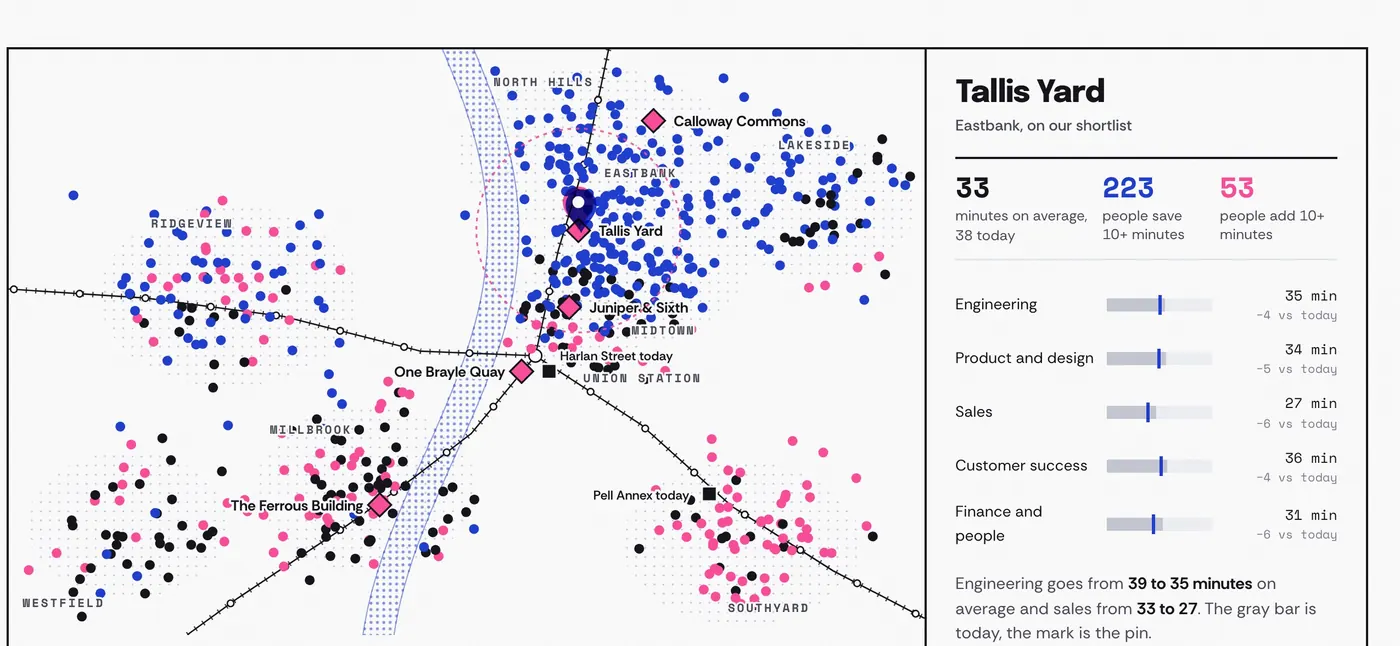
A map of employee homes with a draggable office pin and commute figures by team.
The Sidecourt concept. Each team sees its own commute, so each has a reason to care.

Write for the whole committee

A lease is a big commitment, so the decision rarely sits with one person. The CFO looks at the total cost of the space over the term. The people team looks at commute, amenities and whether the office will help with hiring. Facilities looks at the build-out and the move. The CEO wants a space that fits how the company sees itself.

Give each of them a short section written for them. On a live web proposal, each reader can jump straight to their part. It’s the same idea we cover in your proposal has to win over the B2B buying committee, and our free buying committee map helps you list who’s reading before you write.

Prove the space will be ready

Tenants worry about two things that don’t show up in the term table. Will the space be ready before their current lease ends? And can the owner fund the allowance and run the building well for the next ten years?

Answer both. Show a delivery schedule that works back from their move-in date, with design, permits, construction and furniture on one line. Then speak to the ownership, the building’s capital plans and how it’s managed day to day. Our read is that a tenant signing a long lease is betting on the owner as much as the space, and the proposal is the place to make that bet feel safe.

A use case

Here’s how it often plays out. A 200-person company has a lease ending in about 18 months. Their broker sends a request to six buildings. Five reply with a two-page letter of terms.

The sixth sends the same terms on one page, plus a summary with the net effective rent already worked out, a test fit with the company’s headcount, a commute view for their team and a schedule showing the space ready ahead of the current lease ending. It also comes as a link the broker can forward without reformatting anything.

That’s the one the CFO sends around internally, and the building that gets toured first. The terms may end up close across all six. The difference is that one owner made the decision easier to make.

Make it easy to share

Leasing decisions travel. The broker wants a PDF for the file and the comparison. The committee wants something they can open on a phone between meetings. Send both. Every proposal we build ships as a live web proposal and a matching PDF, so nobody has to choose.

Leasing proposals and broker pitches

This post is about the proposal a building sends to a tenant. If you’re a brokerage pitching an owner for the leasing assignment itself, that’s a different document with a different reader, and we cover it in the commercial real estate proposal that wins the assignment.

Questions we hear about leasing proposals

Is a leasing proposal the same as a letter of intent?

They’re close cousins. The proposal usually comes first, in answer to a tenant’s request. Once both sides agree on the main terms, those terms often move into a letter of intent and then a lease. Both the proposal and the letter are usually non-binding. Have your attorney review the language before anything goes out.

How long should a leasing proposal be?

The terms fit on one page. Everything else should be as long as it needs to be to show the space and answer the committee. For a large tenant, a summary, the terms, a test fit, a delivery plan and a section on the building and ownership is plenty.

Who sends it, the owner or the leasing agent?

Usually the leasing agent sends it for the owner. Either way, the owner’s commitment should be clear on the page, especially on the allowance and the delivery date.

When is a custom leasing proposal worth it?

When the tenant is large enough that the lease changes the value of the building. A ten-year lease on a full floor can be worth many millions over its term. On a $500K deal, a $7.5K proposal is 1.5 percent of what’s on the table, and most leases worth chasing are far bigger than that. Our pricing page shows what each build includes.

The short version

Answer every term on one page, in the broker’s order. Do the net effective math for them. Show the tenant their space, their commute and a delivery date they can trust. Then write a short section for each person who has to say yes.

If you have a tenant worth winning, see the work or start a proposal.

More notes

All notes
Cover illustration for What a Leasing Proposal Should Include to Win the Tenant, from the Closewell Studio blog on sales proposal design
Industries
On this page

A large tenant looking for space almost never gets just one leasing proposal. Their broker sends a request to a handful of buildings, collects the answers and lines them up in a spreadsheet. Your proposal becomes one row in that comparison. In our experience, most building owners answer with a short term letter and save the selling for the tour. That’s a miss, because several of the people who approve the lease may never take the tour.

Below is what we’d put in a leasing proposal for a tenant worth chasing. It starts with the terms everyone expects and ends with the parts most buildings skip.

The terms every leasing proposal needs

The tenant’s broker usually sends a list of the terms they want answered. Answer every one, in the order they asked. Reordering or skipping items makes their job harder, and they’ll notice.

The usual list covers the premises, with the suite, the floor and the rentable square feet. Then the term and the commencement date. Base rent and how it escalates. Free rent or abatement. The tenant improvement allowance, or the work the owner will do. How operating expenses and taxes are handled, with the base year or expense stop spelled out. The security deposit or letter of credit. Renewal, expansion and contraction options. Parking, signage, permitted use and the right to assign or sublet. And a clear date when the proposal expires, along with the line that nothing is binding until a lease is signed.

Our read is that all of this belongs on one page. The broker will copy it into their own sheet anyway, so make that easy. A clean term page also tells the tenant you respect their time, which matters more than it sounds when they’re reading six of these in a week.

Show the math the broker will run

Every broker turns a stack of proposals into a net effective rent, the average cost per square foot once free rent and the allowance are spread across the term. Do that math yourself and show it.

If your face rent is higher than the building down the street but your allowance and abatement bring the effective number lower, say so plainly on the summary page. Otherwise the comparison may lead with the headline rent, and you lose on a number that isn’t what the tenant would pay. We wrote more about this in the proposal pricing page that keeps a buyer reading.

Lead with their future space

A test fit saves the tenant from picturing their team on an empty floor plan. Show their headcount on your floor, with the offices, meeting rooms and open seating they asked for. Add the light, the views, the ceiling heights and who sits on the floors around them.

Then show the commute. A simple view of where their people live and how long it takes to get to your building answers a question every people team will ask. For a company trying to bring its team back to the office, that page can matter more than the rent.

A map of employee homes with a draggable office pin and commute figures by team.
The Sidecourt concept. Each team sees its own commute, so each has a reason to care.

Write for the whole committee

A lease is a big commitment, so the decision rarely sits with one person. The CFO looks at the total cost of the space over the term. The people team looks at commute, amenities and whether the office will help with hiring. Facilities looks at the build-out and the move. The CEO wants a space that fits how the company sees itself.

Give each of them a short section written for them. On a live web proposal, each reader can jump straight to their part. It’s the same idea we cover in your proposal has to win over the B2B buying committee, and our free buying committee map helps you list who’s reading before you write.

Prove the space will be ready

Tenants worry about two things that don’t show up in the term table. Will the space be ready before their current lease ends? And can the owner fund the allowance and run the building well for the next ten years?

Answer both. Show a delivery schedule that works back from their move-in date, with design, permits, construction and furniture on one line. Then speak to the ownership, the building’s capital plans and how it’s managed day to day. Our read is that a tenant signing a long lease is betting on the owner as much as the space, and the proposal is the place to make that bet feel safe.

A use case

Here’s how it often plays out. A 200-person company has a lease ending in about 18 months. Their broker sends a request to six buildings. Five reply with a two-page letter of terms.

The sixth sends the same terms on one page, plus a summary with the net effective rent already worked out, a test fit with the company’s headcount, a commute view for their team and a schedule showing the space ready ahead of the current lease ending. It also comes as a link the broker can forward without reformatting anything.

That’s the one the CFO sends around internally, and the building that gets toured first. The terms may end up close across all six. The difference is that one owner made the decision easier to make.

Make it easy to share

Leasing decisions travel. The broker wants a PDF for the file and the comparison. The committee wants something they can open on a phone between meetings. Send both. Every proposal we build ships as a live web proposal and a matching PDF, so nobody has to choose.

Leasing proposals and broker pitches

This post is about the proposal a building sends to a tenant. If you’re a brokerage pitching an owner for the leasing assignment itself, that’s a different document with a different reader, and we cover it in the commercial real estate proposal that wins the assignment.

Questions we hear about leasing proposals

Is a leasing proposal the same as a letter of intent?

They’re close cousins. The proposal usually comes first, in answer to a tenant’s request. Once both sides agree on the main terms, those terms often move into a letter of intent and then a lease. Both the proposal and the letter are usually non-binding. Have your attorney review the language before anything goes out.

How long should a leasing proposal be?

The terms fit on one page. Everything else should be as long as it needs to be to show the space and answer the committee. For a large tenant, a summary, the terms, a test fit, a delivery plan and a section on the building and ownership is plenty.

Who sends it, the owner or the leasing agent?

Usually the leasing agent sends it for the owner. Either way, the owner’s commitment should be clear on the page, especially on the allowance and the delivery date.

When is a custom leasing proposal worth it?

When the tenant is large enough that the lease changes the value of the building. A ten-year lease on a full floor can be worth many millions over its term. On a $500K deal, a $7.5K proposal is 1.5 percent of what’s on the table, and most leases worth chasing are far bigger than that. Our pricing page shows what each build includes.

The short version

Answer every term on one page, in the broker’s order. Do the net effective math for them. Show the tenant their space, their commute and a delivery date they can trust. Then write a short section for each person who has to say yes.

If you have a tenant worth winning, see the work or start a proposal.

Share this note

XLinkedIn

More notes

All notes

Tell us the deal in a line. We’ll read it and come back with a plan and a price.

Try

Tell us the deal in a line. We’ll read it and come back with a plan and a price.

See the work

Tell us the deal in a line. We’ll read it and come back with a plan and a price.

Try

Got a deal on the calendar?

Leave your email and we'll reach out to talk through the deal, the buyers and the date it needs to be signed.

Prefer to send the RFP? Upload it here

Tableside sample proposal mockup designed by Closewell StudioPlatewell Automation sample proposal mockup designed by Closewell StudioPartwise sample proposal mockup designed by Closewell Studio

Closewell Studio is a Raised Media Co. venture.New York, NY