How Long Does a Proposal Take to Build, Start to Finish

The hours a proposal takes and the days it takes are two different numbers. Here’s where the time goes and how to plan a build that’s ready before the deadline.

The hours a proposal takes and the days it takes are two different numbers. Here’s where the time goes and how to plan a build that’s ready before the deadline.

Cover illustration for How Long Does a Proposal Take to Build, Start to Finish, from the Closewell Studio blog on sales proposal design
How-to

How long does a proposal take? Most people answer with the hours it takes to write, and that’s the smaller number. The bigger one is the calendar. A proposal that needs 30 hours of work can still take three weeks, because those hours are spread across a sales lead, a pricing desk, legal, a subject expert and an executive who all have other jobs.

Our read is that the timeline is set by three things more than by anyone’s typing speed. How clear the brief is, how many people have to review it, and whether there’s a due date someone else picked.

What the numbers say

Loopio, which sells RFP software and has an interest in the topic, surveys proposal teams every year. Its 2026 report, based on 1,533 response professionals, puts the average RFP response at 33 hours of work, two hours faster than the year before. Its 2025 report found that nine people contribute to a proposal on average, and that 64 percent of teams answer bids in 10 days or less.

Read those together and the math gets clear fast. Thirty-some hours split across nine calendars doesn’t happen in a day or two. And those are averages for formal RFP responses, many of which reuse answers from a content library. A proposal written from scratch for one large deal usually needs more thinking and less copying.

Where the time goes

Every proposal moves through the same stages, whether your team builds it or someone else does.

The brief comes first. Someone has to get the deal story out of the account lead’s head and onto paper. Who the buyer is, what they said, who else is reading, who you’re up against and what the number is. Teams that skip this step pay for it later in rewrites.

Then the writing. The executive summary, the plan, the pricing, the proof and the next steps. In our experience, this goes quicker than people expect once the brief is solid.

Then review, which is where most timelines slip. Every reviewer reads at a different time, and each round of comments can start another round. Pricing approval is the usual bottleneck, because it often needs someone senior.

Then design and build, and a final check of every number, name and link before it goes out.

Review sets the pace

If you remember one thing from this post, make it this. The wait between drafts decides how long a proposal takes far more often than the writing does.

So plan review like a meeting, because it is one. Book the review times when the work starts, name one person who makes the final call on comments, and get pricing approved before the draft is done. A team that turns feedback around in a day can move twice as fast as a team that takes three, with the same writers doing the same work.

Planning backward from an RFP due date

With an RFP, someone else sets the deadline. For federal solicitations expected to exceed the simplified acquisition threshold, FAR 5.203 requires agencies to allow at least 30 days to respond, with exceptions such as commercial products and services. Commercial buyers set their own windows, and some are much shorter.

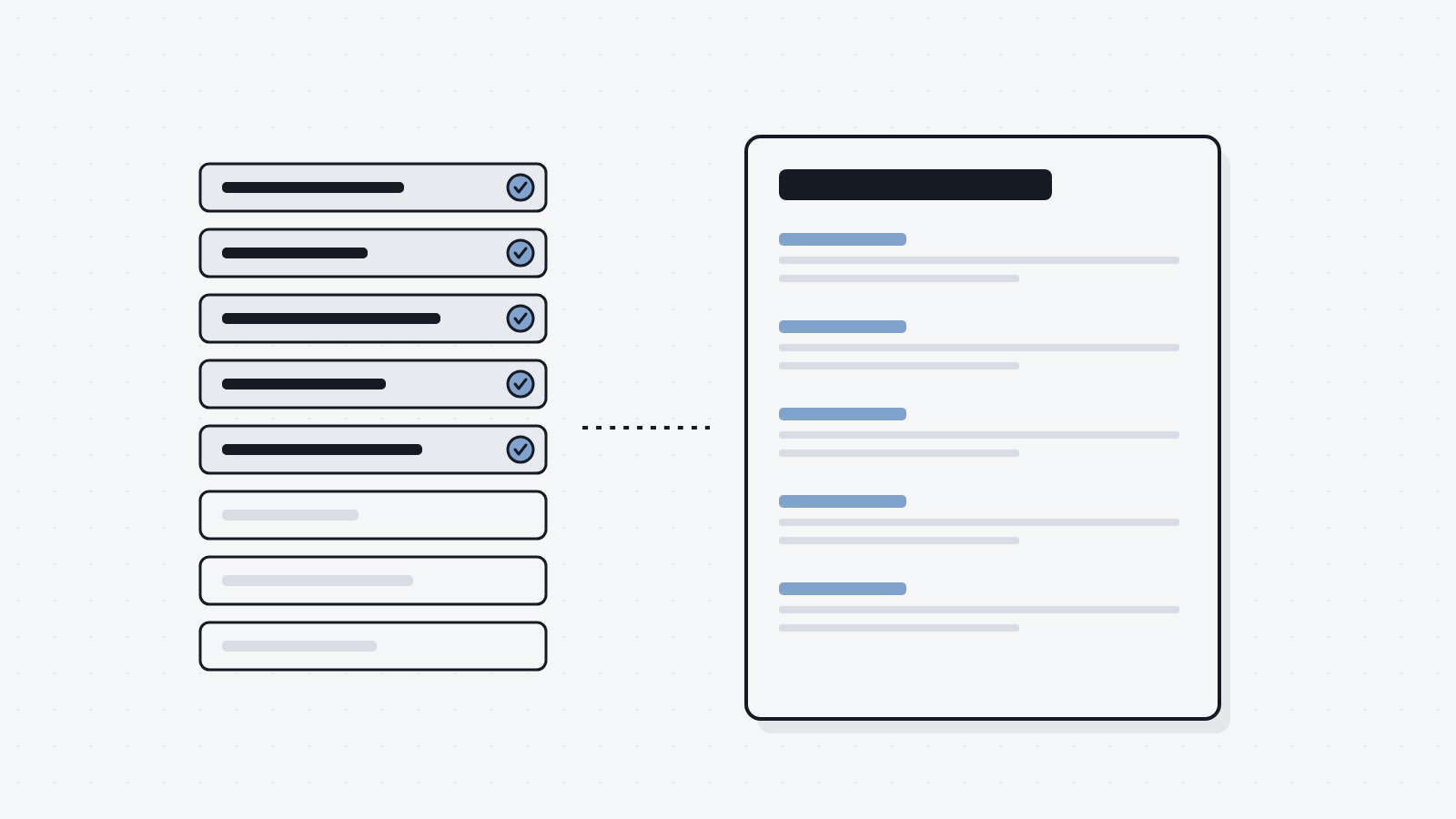
Either way, work backward. Make the bid or no-bid call in the first couple of days. Build the compliance matrix right away, so the outline matches what evaluators will score. Get your questions in before the question deadline. Have a full draft by the halfway point, leave the last few days for review and checks, and plan to submit a day early, since portals have a way of failing on the last afternoon. Our free RFP timeline planner builds this schedule from your due date, and the RFP compliance matrix post covers the outline.
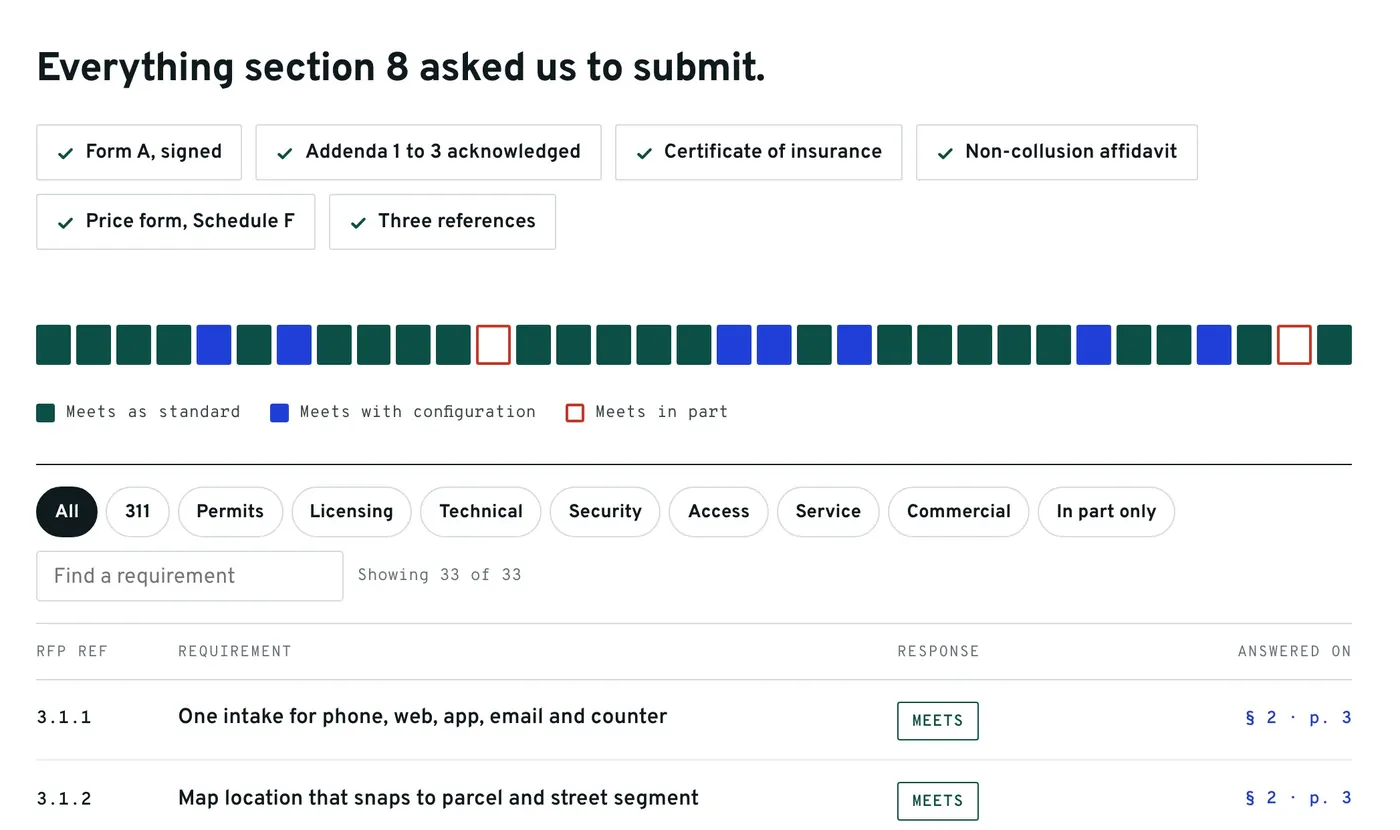
Thirty-three requirements as a colored strip above filters and a list of answers by page.
The Plainspoke concept. A compliance matrix the evaluator can filter to find each answer.

A use case

Here’s how it often plays out. A team has three weeks to answer an RFP for a large services contract.

In the first week, they decide to bid, read the full solicitation, build the compliance matrix and send their questions. The account lead writes a one-page brief. In the second week, the writers draft every section while the pricing desk builds the number. By Friday there’s a full draft. In the third week, the draft goes through two review rounds, design and a final compliance check. It goes into the portal a day before it’s due.

What made it work was the calendar, set on day one, with review times already booked. When teams miss that step, week three usually turns into late nights.

How long a build takes with us

A Handshake takes about 7 business days and a Signature about 10, counted from a finished brief and the deposit. A Board build is planned around your due date. If your deadline is closer, rush delivery brings that to about 3, 5 and 7 business days for 50 percent on top of the build price, when we have room. Both timelines assume your team gets draft feedback back to us within a business day.

We sign an NDA before the brief, and after it you get one exact number. Nothing starts until you’ve agreed to it. Every build ships as a live web proposal and a PDF. For the full walkthrough, see what working with us on a custom sales proposal looks like, and our pricing page shows the delivery time for each build.

What speeds a proposal up

Send everything at the start. Discovery notes, call recordings, the RFP, your current deck and the pricing you have in mind. Every missing piece turns into a question, and every question costs a day.

Name one decision maker for comments. Two reviewers who disagree can stall a draft for days.

And share the plan with the buyer when it makes sense. A mutual action plan puts dates on both sides, so your proposal goes out when the buyer is ready to read it.

Questions we hear about proposal timelines

How long does a proposal take for a large deal?

Longer than a day, at least for one we’d want to send. A short proposal for a friendly buyer can come together in a day or two. For a large deal with several readers, the writing might fit in a day, but the thinking, the review and the pricing approval won’t. Plan on a couple of weeks unless the brief is ready and reviewers are lined up.

When should we start?

As soon as you know a proposal is coming. For an RFP, start the day it’s released. For a sales proposal, start after the discovery call where the buyer asks for it, while the details are fresh.

Why does our review always take longer than the writing?

Because each reviewer reads on their own schedule, and comments often conflict. Booking review times up front and naming one person to settle disagreements fixes most of it.

Does rush delivery cost more?

With us, rush is 50 percent on top of the build price, and we only take it on when we have room. Our honest advice is to plan early, so you don’t need it.

The short version

Hours and days are two different numbers. The brief decides how good the first draft is, and review decides how fast you finish. Book the calendar on day one, work backward from the due date and leave room for checks.

If you have a deadline coming up, start a proposal and tell us the date.

Sources

More notes

All notes
Cover illustration for How Long Does a Proposal Take to Build, Start to Finish, from the Closewell Studio blog on sales proposal design
How-to
On this page

How long does a proposal take? Most people answer with the hours it takes to write, and that’s the smaller number. The bigger one is the calendar. A proposal that needs 30 hours of work can still take three weeks, because those hours are spread across a sales lead, a pricing desk, legal, a subject expert and an executive who all have other jobs.

Our read is that the timeline is set by three things more than by anyone’s typing speed. How clear the brief is, how many people have to review it, and whether there’s a due date someone else picked.

What the numbers say

Loopio, which sells RFP software and has an interest in the topic, surveys proposal teams every year. Its 2026 report, based on 1,533 response professionals, puts the average RFP response at 33 hours of work, two hours faster than the year before. Its 2025 report found that nine people contribute to a proposal on average, and that 64 percent of teams answer bids in 10 days or less.

Read those together and the math gets clear fast. Thirty-some hours split across nine calendars doesn’t happen in a day or two. And those are averages for formal RFP responses, many of which reuse answers from a content library. A proposal written from scratch for one large deal usually needs more thinking and less copying.

Where the time goes

Every proposal moves through the same stages, whether your team builds it or someone else does.

The brief comes first. Someone has to get the deal story out of the account lead’s head and onto paper. Who the buyer is, what they said, who else is reading, who you’re up against and what the number is. Teams that skip this step pay for it later in rewrites.

Then the writing. The executive summary, the plan, the pricing, the proof and the next steps. In our experience, this goes quicker than people expect once the brief is solid.

Then review, which is where most timelines slip. Every reviewer reads at a different time, and each round of comments can start another round. Pricing approval is the usual bottleneck, because it often needs someone senior.

Then design and build, and a final check of every number, name and link before it goes out.

Review sets the pace

If you remember one thing from this post, make it this. The wait between drafts decides how long a proposal takes far more often than the writing does.

So plan review like a meeting, because it is one. Book the review times when the work starts, name one person who makes the final call on comments, and get pricing approved before the draft is done. A team that turns feedback around in a day can move twice as fast as a team that takes three, with the same writers doing the same work.

Planning backward from an RFP due date

With an RFP, someone else sets the deadline. For federal solicitations expected to exceed the simplified acquisition threshold, FAR 5.203 requires agencies to allow at least 30 days to respond, with exceptions such as commercial products and services. Commercial buyers set their own windows, and some are much shorter.

Either way, work backward. Make the bid or no-bid call in the first couple of days. Build the compliance matrix right away, so the outline matches what evaluators will score. Get your questions in before the question deadline. Have a full draft by the halfway point, leave the last few days for review and checks, and plan to submit a day early, since portals have a way of failing on the last afternoon. Our free RFP timeline planner builds this schedule from your due date, and the RFP compliance matrix post covers the outline.

Thirty-three requirements as a colored strip above filters and a list of answers by page.
The Plainspoke concept. A compliance matrix the evaluator can filter to find each answer.

A use case

Here’s how it often plays out. A team has three weeks to answer an RFP for a large services contract.

In the first week, they decide to bid, read the full solicitation, build the compliance matrix and send their questions. The account lead writes a one-page brief. In the second week, the writers draft every section while the pricing desk builds the number. By Friday there’s a full draft. In the third week, the draft goes through two review rounds, design and a final compliance check. It goes into the portal a day before it’s due.

What made it work was the calendar, set on day one, with review times already booked. When teams miss that step, week three usually turns into late nights.

How long a build takes with us

A Handshake takes about 7 business days and a Signature about 10, counted from a finished brief and the deposit. A Board build is planned around your due date. If your deadline is closer, rush delivery brings that to about 3, 5 and 7 business days for 50 percent on top of the build price, when we have room. Both timelines assume your team gets draft feedback back to us within a business day.

We sign an NDA before the brief, and after it you get one exact number. Nothing starts until you’ve agreed to it. Every build ships as a live web proposal and a PDF. For the full walkthrough, see what working with us on a custom sales proposal looks like, and our pricing page shows the delivery time for each build.

What speeds a proposal up

Send everything at the start. Discovery notes, call recordings, the RFP, your current deck and the pricing you have in mind. Every missing piece turns into a question, and every question costs a day.

Name one decision maker for comments. Two reviewers who disagree can stall a draft for days.

And share the plan with the buyer when it makes sense. A mutual action plan puts dates on both sides, so your proposal goes out when the buyer is ready to read it.

Questions we hear about proposal timelines

How long does a proposal take for a large deal?

Longer than a day, at least for one we’d want to send. A short proposal for a friendly buyer can come together in a day or two. For a large deal with several readers, the writing might fit in a day, but the thinking, the review and the pricing approval won’t. Plan on a couple of weeks unless the brief is ready and reviewers are lined up.

When should we start?

As soon as you know a proposal is coming. For an RFP, start the day it’s released. For a sales proposal, start after the discovery call where the buyer asks for it, while the details are fresh.

Why does our review always take longer than the writing?

Because each reviewer reads on their own schedule, and comments often conflict. Booking review times up front and naming one person to settle disagreements fixes most of it.

Does rush delivery cost more?

With us, rush is 50 percent on top of the build price, and we only take it on when we have room. Our honest advice is to plan early, so you don’t need it.

The short version

Hours and days are two different numbers. The brief decides how good the first draft is, and review decides how fast you finish. Book the calendar on day one, work backward from the due date and leave room for checks.

If you have a deadline coming up, start a proposal and tell us the date.

Sources

Share this note

XLinkedIn

More notes

All notes

Tell us the deal in a line. We’ll read it and come back with a plan and a price.

Try

Tell us the deal in a line. We’ll read it and come back with a plan and a price.

See the work

Tell us the deal in a line. We’ll read it and come back with a plan and a price.

Try

Got a deal on the calendar?

Leave your email and we'll reach out to talk through the deal, the buyers and the date it needs to be signed.

Prefer to send the RFP? Upload it here

Tableside sample proposal mockup designed by Closewell StudioPlatewell Automation sample proposal mockup designed by Closewell StudioPartwise sample proposal mockup designed by Closewell Studio

Closewell Studio is a Raised Media Co. venture.New York, NY