Past Performance in a Proposal Is a Relevance Argument

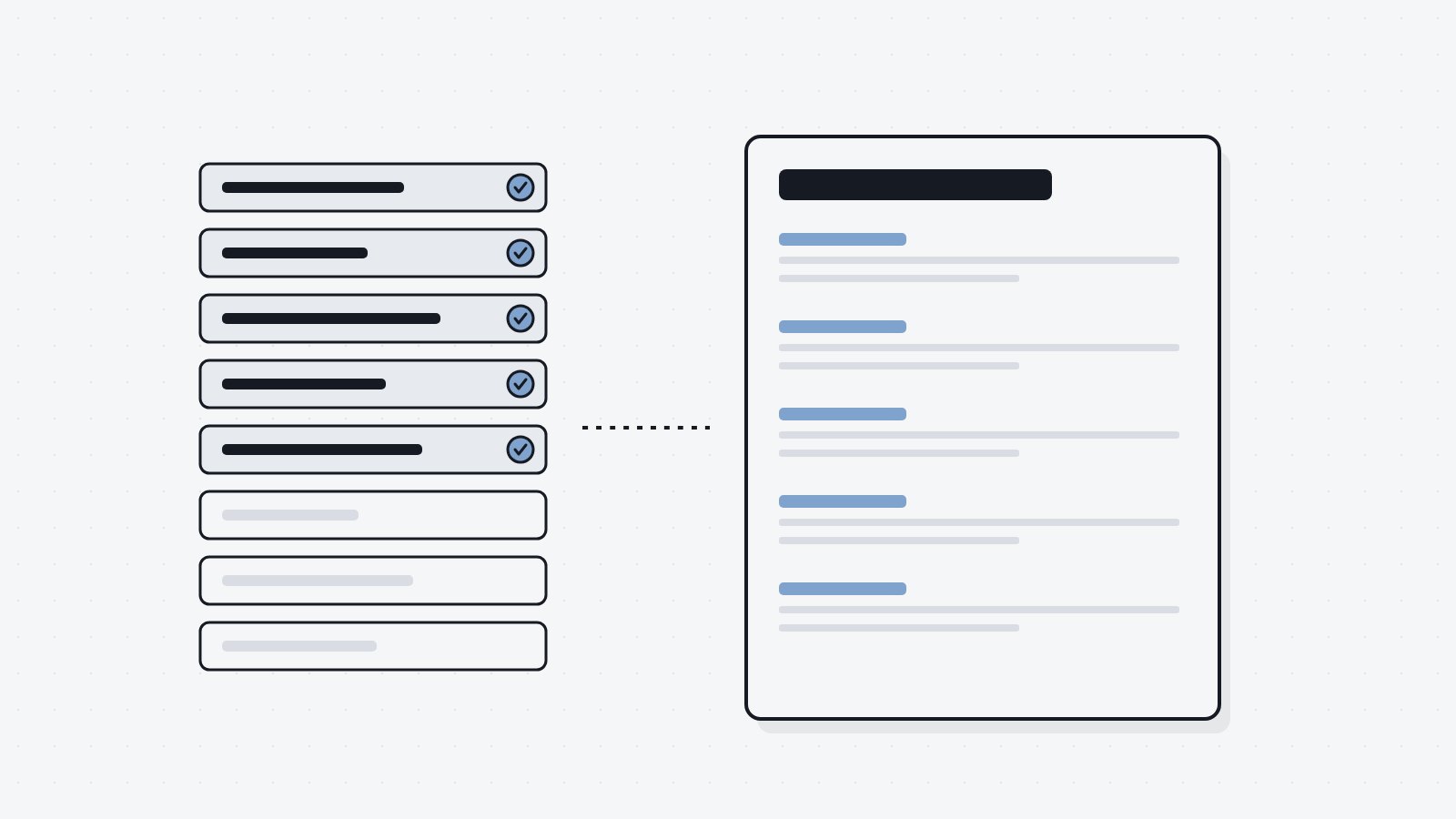
Plenty of past performance sections read like a client list. We’d pick references by match, open each one with why it fits and name the job that went badly.

Plenty of past performance sections read like a client list. We’d pick references by match, open each one with why it fits and name the job that went badly.

Cover illustration for Past Performance in a Proposal Is a Relevance Argument, from the Closewell Studio blog on sales proposal design
How-to

Past performance in a proposal is your evidence that you’ve done this kind of work and done it well. Plenty of teams treat the section as a list of their biggest contracts. Our read is that it works better as an argument about relevance. An evaluator wants to know how much each past job looks like this one, and what the record says about how you’d perform. If you’re writing an RFP response, that question should pick your references before anyone starts writing.

What the rules say about past performance

On a federal bid, there are two texts to know right now. The codified FAR covers this at 15.304 and 15.305. The FAR Overhaul rewrote Part 15 in 2025 and moved the same ideas to 15.104 and 15.202, and more than 30 agencies have posted deviations on acquisition.gov. Go by what your solicitation says. The two line up on most of what follows.

  • It has to be evaluated. The overhaul text says that applies to every competitive source selection, unless the contracting officer documents why it isn’t appropriate.
  • Relevance is named in the rule. Evaluators consider the currency and relevance of the information, its source, its context and general trends in your performance.
  • Private work can count. The RFP has to give you a chance to identify similar contracts, including federal, state, local and private sector ones.
  • Evaluators can look past your list. They can use information from any other source, so leaving a contract off doesn’t hide it.
  • Problems have a place. The RFP also has to let you describe problems on those contracts and what you did about them.
  • No record is neutral. An offeror with no relevant record can’t be rated favorably or unfavorably on past performance.

Some solicitations spell out the scale. In a GAO decision from April 2026, the RFP rated each effort very relevant, relevant, somewhat relevant or not relevant, and an effort had to meet all of the criteria in a column to get that rating. An offeror with no relevant record was rated neutral. If your solicitation works like that, one missing criterion can drop a job down a column, so read the scale before you pick.

We’d expect state, local and commercial buyers to ask the same questions in their own words.

Pick references by match

Start by reading your own record. Federal evaluations sit in CPARS, and you get up to 14 calendar days to comment when one is ready. Read them before you choose, because source selection officials can read them too.

Then build a simple grid. The rows are whatever the solicitation says makes a job relevant, such as scope, size, complexity, type of customer and how recent it was. The columns are your candidate contracts. Fill it in honestly and pick the columns with the most matches. The biggest name on your client list often won’t be one of them.

Our free Capability Statement Builder pushes this habit on a smaller page. Its past performance prompt says to pick the jobs that look most like this agency’s work, up to three. For the page itself, see what a capability statement should do in one page.

A match doesn’t have to mean the same industry. In our Lumen & Lathe concept, a lighting firm is pitching a science museum and its strongest references are archives and libraries. The shared risk is light damaging the collection, so the case leans on conservation. Find what’s hard about this job, then look for where you’ve already dealt with it. That habit also feeds your win themes.

How to show past performance in a proposal

Don’t make the evaluator work it out. Give every entry the same layout, in the form the solicitation asks for if it has one.

  • The basics. Customer, contract number if there is one, value, period and whether you were prime or sub.
  • A relevance line at the top. One or two sentences, in the solicitation’s own words, saying why this job matches the new one.
  • What you did. The scope, the parts that look like the new work and who on the proposed team was there.
  • What happened. Results with numbers the customer gave you or approved. If you don’t have a number, describe the change plainly.
  • A reference who’ll answer. Call them first, so they know who’s calling and which job it’s about.

Placement can help too, when the format allows it. In our Plainspoke concept, a city permitting response, the similar cities sit in the City Manager’s chapter, right under the commitments they back up, with each city’s population and go-live year. Contacts go in an appendix. If the bid runs through a portal as a fixed PDF, the solicitation’s structure and format rules come first.

What to do about a bad reference

Say you’ve got a contract that went sideways, and it’s the best match you have. Leaving it off may not help, since evaluators can find it elsewhere.

We’d name it. Say what went wrong in one plain sentence, what you changed and how you know the fix held. The rules make room for that, since the RFP has to let you describe problems and corrective actions. If evaluators find adverse information you never had a chance to answer, you may get that chance through clarifications or discussions, but don’t plan on it.

Keep the space you give it in proportion. A short, honest paragraph sounds like someone who runs a tight shop. A long defense draws attention to the problem.

What to do with no record

A bidder with no relevant record gets treated as neutral, which the rules say can’t count for or against it. Our read is that neutral keeps you in the running and still leaves you behind a rival with a strong, relevant record. So use everything the rules let you count.

  • Commercial, state and local work. The language on similar contracts covers all of it. Show why it matches.
  • Key people. Evaluators can consider key personnel who have relevant experience. Name the person and the job.
  • Predecessors and subcontractors. That rule also covers predecessor companies and subcontractors doing major or critical parts of the work, when that’s relevant.
  • Joint ventures. If the venture itself has no record, the overhaul text says each party’s past performance gets considered.
  • Small business teams. Under 13 CFR 125.2(g), when a small business prime names its first-tier small business subcontractors in the offer, the agency must consider their past performance if the prime’s own record doesn’t show what’s needed.

Past performance on a commercial deal

Nobody’s scoring it on a sheet, but the buyer is still asking whether you’ve done this for someone like them. Pick for fit, use two or three, and put each one next to the claim it proves so the doubt gets answered where it comes up.

Get written permission before you use a real client’s name, pricing or work. That’s a rule we don’t bend. A description by industry and size is often enough, as long as every detail is true. For numbers, use only what the client gave you or approved.

A use case

Picture a civil engineering firm answering a county RFP for a $14M water treatment upgrade. The RFP asks for three similar contracts from the last five years, and the firm’s instinct is to lead with its $60M highway job, because it’s the biggest thing on the website.

What the RFP asks forCounty water plant, 2024Highway interchange, 2019
Similar scopeYes, a treatment upgradeNo, roads and bridges
Similar sizeYes, $11MNo, $60M
Within five yearsYesNo
Public agencyYesYes

The water plant takes the first slot, even though it’s the smaller job. The highway job moves to a line in the company overview. Each entry opens with a relevance line in the county’s words, and the team calls every reference before the response goes out. The firm’s record hasn’t changed. An evaluator can now see the match in a minute.

Questions we hear about past performance

How many references should a proposal include?

As many as the solicitation asks for. If it doesn’t say, we’d pick three well-matched ones over six loose ones.

How recent does past performance need to be?

The solicitation usually sets the window, so start there. If it’s silent, lead with recent work. The rules name currency as something evaluators consider.

What’s the difference between past performance and experience?

Experience is what you’ve done. Past performance is how well you did it. The overhaul text lists them as separate factors and a solicitation can score them separately, so see whether you need to answer both.

Can we use commercial work on a government bid?

Usually, yes. The rules mention private contracts for efforts similar to the requirement. See how your solicitation defines relevant, then show the match line by line.

The short version

Past performance in a proposal gets read for relevance. Read your own record, pick references by match, put the match at the top of each entry and deal with a bad job plainly. If you have no record, count everything the rules let you count.

If a solicitation is sitting on your desk and the past performance volume worries you, send us the RFP. A Board build runs in the solicitation’s own order, gets checked against a compliance matrix and ships as a portal-ready PDF and a live response. You can also read what to look for in government proposal writing services.

Sources

More notes

All notes
Cover illustration for Past Performance in a Proposal Is a Relevance Argument, from the Closewell Studio blog on sales proposal design
How-to

Past performance in a proposal is your evidence that you’ve done this kind of work and done it well. Plenty of teams treat the section as a list of their biggest contracts. Our read is that it works better as an argument about relevance. An evaluator wants to know how much each past job looks like this one, and what the record says about how you’d perform. If you’re writing an RFP response, that question should pick your references before anyone starts writing.

What the rules say about past performance

On a federal bid, there are two texts to know right now. The codified FAR covers this at 15.304 and 15.305. The FAR Overhaul rewrote Part 15 in 2025 and moved the same ideas to 15.104 and 15.202, and more than 30 agencies have posted deviations on acquisition.gov. Go by what your solicitation says. The two line up on most of what follows.

  • It has to be evaluated. The overhaul text says that applies to every competitive source selection, unless the contracting officer documents why it isn’t appropriate.
  • Relevance is named in the rule. Evaluators consider the currency and relevance of the information, its source, its context and general trends in your performance.
  • Private work can count. The RFP has to give you a chance to identify similar contracts, including federal, state, local and private sector ones.
  • Evaluators can look past your list. They can use information from any other source, so leaving a contract off doesn’t hide it.
  • Problems have a place. The RFP also has to let you describe problems on those contracts and what you did about them.
  • No record is neutral. An offeror with no relevant record can’t be rated favorably or unfavorably on past performance.

Some solicitations spell out the scale. In a GAO decision from April 2026, the RFP rated each effort very relevant, relevant, somewhat relevant or not relevant, and an effort had to meet all of the criteria in a column to get that rating. An offeror with no relevant record was rated neutral. If your solicitation works like that, one missing criterion can drop a job down a column, so read the scale before you pick.

We’d expect state, local and commercial buyers to ask the same questions in their own words.

Pick references by match

Start by reading your own record. Federal evaluations sit in CPARS, and you get up to 14 calendar days to comment when one is ready. Read them before you choose, because source selection officials can read them too.

Then build a simple grid. The rows are whatever the solicitation says makes a job relevant, such as scope, size, complexity, type of customer and how recent it was. The columns are your candidate contracts. Fill it in honestly and pick the columns with the most matches. The biggest name on your client list often won’t be one of them.

Our free Capability Statement Builder pushes this habit on a smaller page. Its past performance prompt says to pick the jobs that look most like this agency’s work, up to three. For the page itself, see what a capability statement should do in one page.

A match doesn’t have to mean the same industry. In our Lumen & Lathe concept, a lighting firm is pitching a science museum and its strongest references are archives and libraries. The shared risk is light damaging the collection, so the case leans on conservation. Find what’s hard about this job, then look for where you’ve already dealt with it. That habit also feeds your win themes.

How to show past performance in a proposal

Don’t make the evaluator work it out. Give every entry the same layout, in the form the solicitation asks for if it has one.

  • The basics. Customer, contract number if there is one, value, period and whether you were prime or sub.
  • A relevance line at the top. One or two sentences, in the solicitation’s own words, saying why this job matches the new one.
  • What you did. The scope, the parts that look like the new work and who on the proposed team was there.
  • What happened. Results with numbers the customer gave you or approved. If you don’t have a number, describe the change plainly.
  • A reference who’ll answer. Call them first, so they know who’s calling and which job it’s about.

Placement can help too, when the format allows it. In our Plainspoke concept, a city permitting response, the similar cities sit in the City Manager’s chapter, right under the commitments they back up, with each city’s population and go-live year. Contacts go in an appendix. If the bid runs through a portal as a fixed PDF, the solicitation’s structure and format rules come first.

What to do about a bad reference

Say you’ve got a contract that went sideways, and it’s the best match you have. Leaving it off may not help, since evaluators can find it elsewhere.

We’d name it. Say what went wrong in one plain sentence, what you changed and how you know the fix held. The rules make room for that, since the RFP has to let you describe problems and corrective actions. If evaluators find adverse information you never had a chance to answer, you may get that chance through clarifications or discussions, but don’t plan on it.

Keep the space you give it in proportion. A short, honest paragraph sounds like someone who runs a tight shop. A long defense draws attention to the problem.

What to do with no record

A bidder with no relevant record gets treated as neutral, which the rules say can’t count for or against it. Our read is that neutral keeps you in the running and still leaves you behind a rival with a strong, relevant record. So use everything the rules let you count.

  • Commercial, state and local work. The language on similar contracts covers all of it. Show why it matches.
  • Key people. Evaluators can consider key personnel who have relevant experience. Name the person and the job.
  • Predecessors and subcontractors. That rule also covers predecessor companies and subcontractors doing major or critical parts of the work, when that’s relevant.
  • Joint ventures. If the venture itself has no record, the overhaul text says each party’s past performance gets considered.
  • Small business teams. Under 13 CFR 125.2(g), when a small business prime names its first-tier small business subcontractors in the offer, the agency must consider their past performance if the prime’s own record doesn’t show what’s needed.

Past performance on a commercial deal

Nobody’s scoring it on a sheet, but the buyer is still asking whether you’ve done this for someone like them. Pick for fit, use two or three, and put each one next to the claim it proves so the doubt gets answered where it comes up.

Get written permission before you use a real client’s name, pricing or work. That’s a rule we don’t bend. A description by industry and size is often enough, as long as every detail is true. For numbers, use only what the client gave you or approved.

A use case

Picture a civil engineering firm answering a county RFP for a $14M water treatment upgrade. The RFP asks for three similar contracts from the last five years, and the firm’s instinct is to lead with its $60M highway job, because it’s the biggest thing on the website.

What the RFP asks forCounty water plant, 2024Highway interchange, 2019
Similar scopeYes, a treatment upgradeNo, roads and bridges
Similar sizeYes, $11MNo, $60M
Within five yearsYesNo
Public agencyYesYes

The water plant takes the first slot, even though it’s the smaller job. The highway job moves to a line in the company overview. Each entry opens with a relevance line in the county’s words, and the team calls every reference before the response goes out. The firm’s record hasn’t changed. An evaluator can now see the match in a minute.

Questions we hear about past performance

How many references should a proposal include?

As many as the solicitation asks for. If it doesn’t say, we’d pick three well-matched ones over six loose ones.

How recent does past performance need to be?

The solicitation usually sets the window, so start there. If it’s silent, lead with recent work. The rules name currency as something evaluators consider.

What’s the difference between past performance and experience?

Experience is what you’ve done. Past performance is how well you did it. The overhaul text lists them as separate factors and a solicitation can score them separately, so see whether you need to answer both.

Can we use commercial work on a government bid?

Usually, yes. The rules mention private contracts for efforts similar to the requirement. See how your solicitation defines relevant, then show the match line by line.

The short version

Past performance in a proposal gets read for relevance. Read your own record, pick references by match, put the match at the top of each entry and deal with a bad job plainly. If you have no record, count everything the rules let you count.

If a solicitation is sitting on your desk and the past performance volume worries you, send us the RFP. A Board build runs in the solicitation’s own order, gets checked against a compliance matrix and ships as a portal-ready PDF and a live response. You can also read what to look for in government proposal writing services.

Sources

Share this note

XLinkedIn

More notes

All notes
Cover illustration for Past Performance in a Proposal Is a Relevance Argument, from the Closewell Studio blog on sales proposal design
How-to

Past performance in a proposal is your evidence that you’ve done this kind of work and done it well. Plenty of teams treat the section as a list of their biggest contracts. Our read is that it works better as an argument about relevance. An evaluator wants to know how much each past job looks like this one, and what the record says about how you’d perform. If you’re writing an RFP response, that question should pick your references before anyone starts writing.

What the rules say about past performance

On a federal bid, there are two texts to know right now. The codified FAR covers this at 15.304 and 15.305. The FAR Overhaul rewrote Part 15 in 2025 and moved the same ideas to 15.104 and 15.202, and more than 30 agencies have posted deviations on acquisition.gov. Go by what your solicitation says. The two line up on most of what follows.

  • It has to be evaluated. The overhaul text says that applies to every competitive source selection, unless the contracting officer documents why it isn’t appropriate.
  • Relevance is named in the rule. Evaluators consider the currency and relevance of the information, its source, its context and general trends in your performance.
  • Private work can count. The RFP has to give you a chance to identify similar contracts, including federal, state, local and private sector ones.
  • Evaluators can look past your list. They can use information from any other source, so leaving a contract off doesn’t hide it.
  • Problems have a place. The RFP also has to let you describe problems on those contracts and what you did about them.
  • No record is neutral. An offeror with no relevant record can’t be rated favorably or unfavorably on past performance.

Some solicitations spell out the scale. In a GAO decision from April 2026, the RFP rated each effort very relevant, relevant, somewhat relevant or not relevant, and an effort had to meet all of the criteria in a column to get that rating. An offeror with no relevant record was rated neutral. If your solicitation works like that, one missing criterion can drop a job down a column, so read the scale before you pick.

We’d expect state, local and commercial buyers to ask the same questions in their own words.

Pick references by match

Start by reading your own record. Federal evaluations sit in CPARS, and you get up to 14 calendar days to comment when one is ready. Read them before you choose, because source selection officials can read them too.

Then build a simple grid. The rows are whatever the solicitation says makes a job relevant, such as scope, size, complexity, type of customer and how recent it was. The columns are your candidate contracts. Fill it in honestly and pick the columns with the most matches. The biggest name on your client list often won’t be one of them.

Our free Capability Statement Builder pushes this habit on a smaller page. Its past performance prompt says to pick the jobs that look most like this agency’s work, up to three. For the page itself, see what a capability statement should do in one page.

A match doesn’t have to mean the same industry. In our Lumen & Lathe concept, a lighting firm is pitching a science museum and its strongest references are archives and libraries. The shared risk is light damaging the collection, so the case leans on conservation. Find what’s hard about this job, then look for where you’ve already dealt with it. That habit also feeds your win themes.

How to show past performance in a proposal

Don’t make the evaluator work it out. Give every entry the same layout, in the form the solicitation asks for if it has one.

  • The basics. Customer, contract number if there is one, value, period and whether you were prime or sub.
  • A relevance line at the top. One or two sentences, in the solicitation’s own words, saying why this job matches the new one.
  • What you did. The scope, the parts that look like the new work and who on the proposed team was there.
  • What happened. Results with numbers the customer gave you or approved. If you don’t have a number, describe the change plainly.
  • A reference who’ll answer. Call them first, so they know who’s calling and which job it’s about.

Placement can help too, when the format allows it. In our Plainspoke concept, a city permitting response, the similar cities sit in the City Manager’s chapter, right under the commitments they back up, with each city’s population and go-live year. Contacts go in an appendix. If the bid runs through a portal as a fixed PDF, the solicitation’s structure and format rules come first.

What to do about a bad reference

Say you’ve got a contract that went sideways, and it’s the best match you have. Leaving it off may not help, since evaluators can find it elsewhere.

We’d name it. Say what went wrong in one plain sentence, what you changed and how you know the fix held. The rules make room for that, since the RFP has to let you describe problems and corrective actions. If evaluators find adverse information you never had a chance to answer, you may get that chance through clarifications or discussions, but don’t plan on it.

Keep the space you give it in proportion. A short, honest paragraph sounds like someone who runs a tight shop. A long defense draws attention to the problem.

What to do with no record

A bidder with no relevant record gets treated as neutral, which the rules say can’t count for or against it. Our read is that neutral keeps you in the running and still leaves you behind a rival with a strong, relevant record. So use everything the rules let you count.

  • Commercial, state and local work. The language on similar contracts covers all of it. Show why it matches.
  • Key people. Evaluators can consider key personnel who have relevant experience. Name the person and the job.
  • Predecessors and subcontractors. That rule also covers predecessor companies and subcontractors doing major or critical parts of the work, when that’s relevant.
  • Joint ventures. If the venture itself has no record, the overhaul text says each party’s past performance gets considered.
  • Small business teams. Under 13 CFR 125.2(g), when a small business prime names its first-tier small business subcontractors in the offer, the agency must consider their past performance if the prime’s own record doesn’t show what’s needed.

Past performance on a commercial deal

Nobody’s scoring it on a sheet, but the buyer is still asking whether you’ve done this for someone like them. Pick for fit, use two or three, and put each one next to the claim it proves so the doubt gets answered where it comes up.

Get written permission before you use a real client’s name, pricing or work. That’s a rule we don’t bend. A description by industry and size is often enough, as long as every detail is true. For numbers, use only what the client gave you or approved.

A use case

Picture a civil engineering firm answering a county RFP for a $14M water treatment upgrade. The RFP asks for three similar contracts from the last five years, and the firm’s instinct is to lead with its $60M highway job, because it’s the biggest thing on the website.

What the RFP asks forCounty water plant, 2024Highway interchange, 2019
Similar scopeYes, a treatment upgradeNo, roads and bridges
Similar sizeYes, $11MNo, $60M
Within five yearsYesNo
Public agencyYesYes

The water plant takes the first slot, even though it’s the smaller job. The highway job moves to a line in the company overview. Each entry opens with a relevance line in the county’s words, and the team calls every reference before the response goes out. The firm’s record hasn’t changed. An evaluator can now see the match in a minute.

Questions we hear about past performance

How many references should a proposal include?

As many as the solicitation asks for. If it doesn’t say, we’d pick three well-matched ones over six loose ones.

How recent does past performance need to be?

The solicitation usually sets the window, so start there. If it’s silent, lead with recent work. The rules name currency as something evaluators consider.

What’s the difference between past performance and experience?

Experience is what you’ve done. Past performance is how well you did it. The overhaul text lists them as separate factors and a solicitation can score them separately, so see whether you need to answer both.

Can we use commercial work on a government bid?

Usually, yes. The rules mention private contracts for efforts similar to the requirement. See how your solicitation defines relevant, then show the match line by line.

The short version

Past performance in a proposal gets read for relevance. Read your own record, pick references by match, put the match at the top of each entry and deal with a bad job plainly. If you have no record, count everything the rules let you count.

If a solicitation is sitting on your desk and the past performance volume worries you, send us the RFP. A Board build runs in the solicitation’s own order, gets checked against a compliance matrix and ships as a portal-ready PDF and a live response. You can also read what to look for in government proposal writing services.

Sources

Share this note

XLinkedIn

More notes

All notes

Tell us the deal in a line. We’ll read it and come back with a plan and a price.

Try

Tell us the deal in a line. We’ll read it and come back with a plan and a price.

See the work

Tell us the deal in a line. We’ll read it and come back with a plan and a price.

Try