Search for business proposal examples and you’ll mostly find templates. A cover, an about-us page, a scope, a price and a signature line, with the industry swapped in. That’s useful if you need a starting point. It’s less useful if you’re about to bid on something big against people using the same starting point.
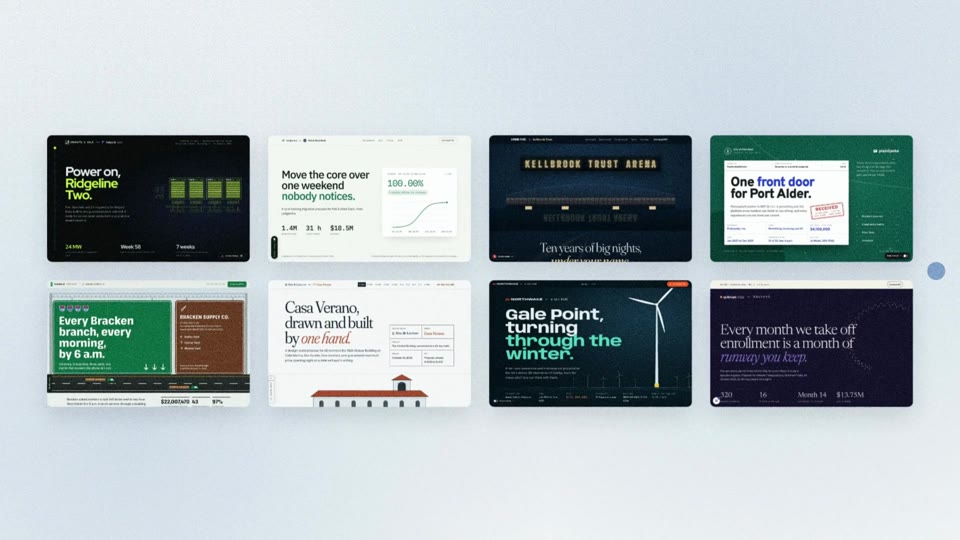
Every industry has its version of the proposal everyone sends. Below are six of them, each next to an example we built for the same kind of deal. The companies are invented, so we could show the full build without anyone’s private numbers. You can open every one on our work page.
What most business proposal examples have in common
They’re organized around the seller. Who we are, what we do, why we’re great, and then the buyer’s problem somewhere around page eight. Our read is that this order made sense when one person read the proposal start to finish. It doesn’t fit how big decisions get made now, with a CFO, an operations lead, legal and an executive each reading for one thing.
So every build below starts from the same question. Who’s reading this, and what does each of them need to say yes? The answer looks very different from one industry to the next, which is the point.
Construction, a data center build
The usual version. A thick bid binder. Qualifications, safety record, a project list, a schedule exported from scheduling software at a size nobody can read, and the number near the back.
Our example. Granite & Vale Builders pitching Halyard Data on a four-hall data center. The proposal leads with the owner’s date to power on and works backward from it, phase by phase, so the owner sees how each hall comes online. The guaranteed price sits next to the schedule, because for a data center owner, time and money are the same conversation.

We wrote more about this in the construction bid proposal is overdue for a redesign.
Software, a core banking migration
The usual version. A sales deck turned into a PDF. Product screenshots, a logo wall, a feature grid and the pricing slide at the end.
Our example. Ledgerline proposing a core banking migration to Pell & Ward Bank. The buyer’s real fear is the weekend the bank switches over, so the proposal is built around that weekend, hour by hour. The CFO gets cost and rollout side by side. The risk and compliance team gets its own chapter. The features show up only where they answer a worry.

For more on the format, see the SaaS sales proposal built for an enterprise buyer.
Sponsorship, arena naming rights
The usual version. A one-page sheet or a short deck. Attendance numbers, a few logo placements and a price per year.
Our example. Harbor Point Arena pitching a ten-year naming rights deal to Kellbrook Trust. The sponsor sees its name on the building, the signage, the tickets and the broadcast, before anyone signs. The proposal answers what a marketing lead and a bank’s executive committee each need to hear, which are two very different conversations.

Our guide to writing a sponsorship proposal brands say yes to goes deeper.
Government, a city permitting platform
The usual version. A wall of text in the order the vendor’s content library happens to store it. Evaluators hunt for each requirement with a scoring sheet in one hand.
Our example. Plainspoke responding to the City of Port Alder’s RFP for a permitting and 311 platform. Every required section sits in the order the solicitation asked for, with a compliance matrix that points to the page for each requirement. The live version gives evaluators the same structure with search and links, and the PDF goes into the portal as required.

See how to write a government RFP response evaluators can score for the approach.
Logistics, a freight RFP
The usual version. A rate spreadsheet plus a company overview. The shipper’s procurement team does all the comparing.
Our example. Sixmile Freight answering Bracken Supply Co.’s truckload RFP across 140 lanes and 31 branches. The lanes are on a map the shipper can explore, branch by branch, with rates and service levels together. The shipper’s transportation lead sees coverage. Finance sees the total. Nobody has to rebuild the bid in their own sheet to understand it.

We cover what shippers look for in the 3PL proposal.
Hospitality, a hotel design-build
The usual version. A design firm’s portfolio and a contractor’s qualifications stapled together, with two separate fees.
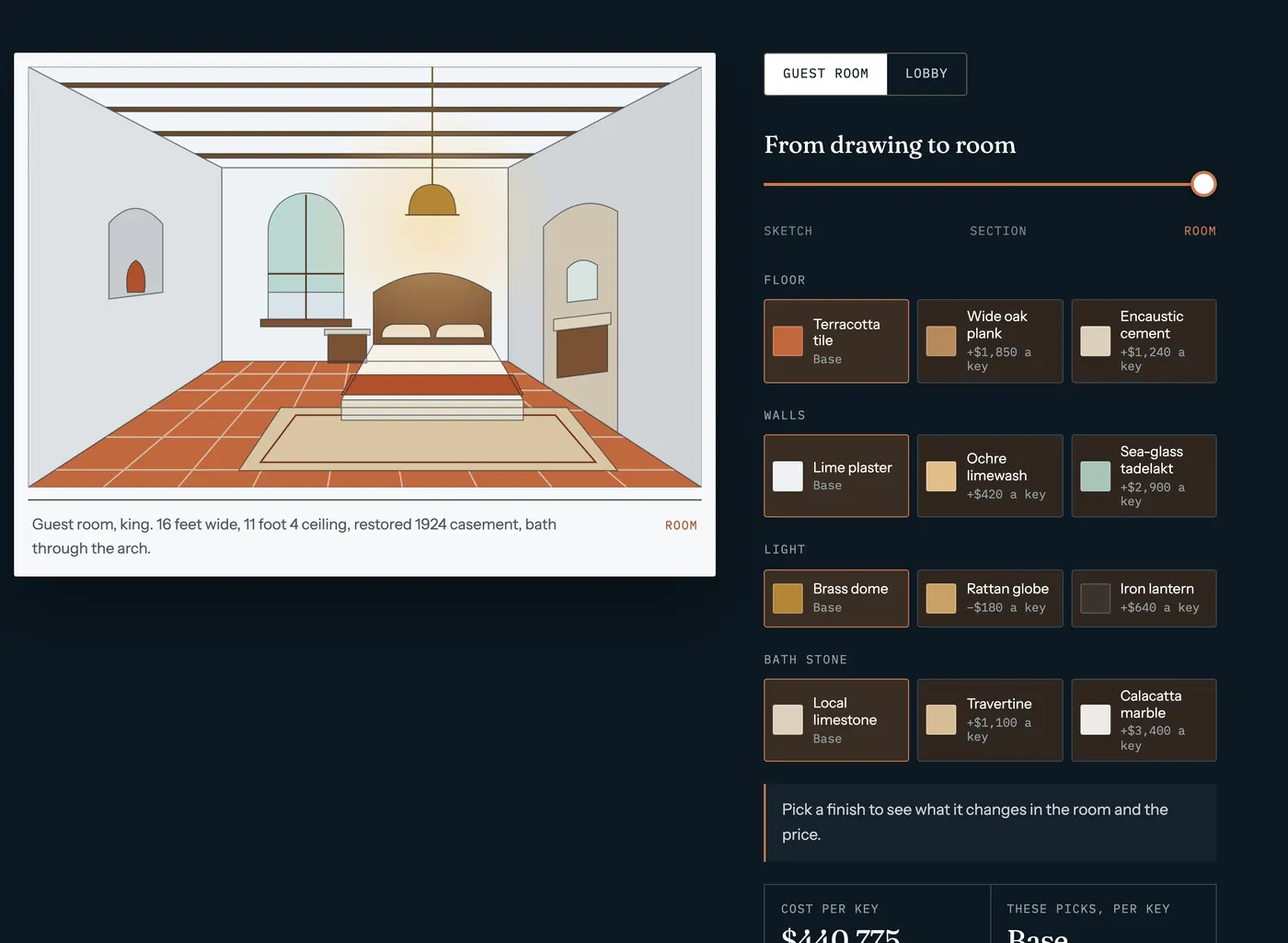
Our example. Oak & Lantern proposing to design and build Casa Verano, a 42-key hotel, under one contract. The owner sees the guest experience and the budget in the same place, room by room. One team, one schedule, one number, which is the whole reason an owner chooses design-build.
What changed across all six
Look at the six builds side by side and the pattern shows. None of them lead with the seller. Each one opens on the buyer’s outcome, gives each reader a section of their own, puts the price next to the thing it pays for and makes the next step obvious. And every one ships as a live web proposal plus a PDF, so it works for the committee on a phone and for procurement on file.
In our experience, the format changes far more than people expect from industry to industry. The thinking behind it stays the same. That’s why we don’t sell templates. A template would make all six of these look alike again.
Questions we hear about these examples
Are these real client proposals?
No. Every company and figure in them is invented, so we can show full builds publicly. We never share client names or client pricing. Before a real brief, we sign an NDA.
Can we use one of these as a template?
You’re welcome to borrow ideas. We build each proposal from scratch for one deal, though, because the structure comes from who’s reading and what they need. Our free proposal checklist is a good place to start if you’re building one yourself.
What does a build like these cost?
Handshake, for one buyer and one decision, starts at $7.5K. Signature, where several people sign off, starts at $12.5K. Board, for formal reviews and RFPs, starts at $20K. On a $500K deal, a $7.5K proposal is 1.5 percent of what’s on the table. You get one exact number after the brief, and nothing starts until you agree. Our pricing page has the details.
How long does a build take?
A Handshake takes about 7 business days and a Signature about 10, counted from a finished brief and the deposit. A Board build is planned around your due date. More in how long does a proposal take to build.
The short version
The usual business proposal looks the same across a whole industry because it’s built around the seller. The six examples above start from the buyer and each person deciding, and they look nothing alike because those people want different things.
See the full builds, or start a proposal for the deal you’ve got coming up.